


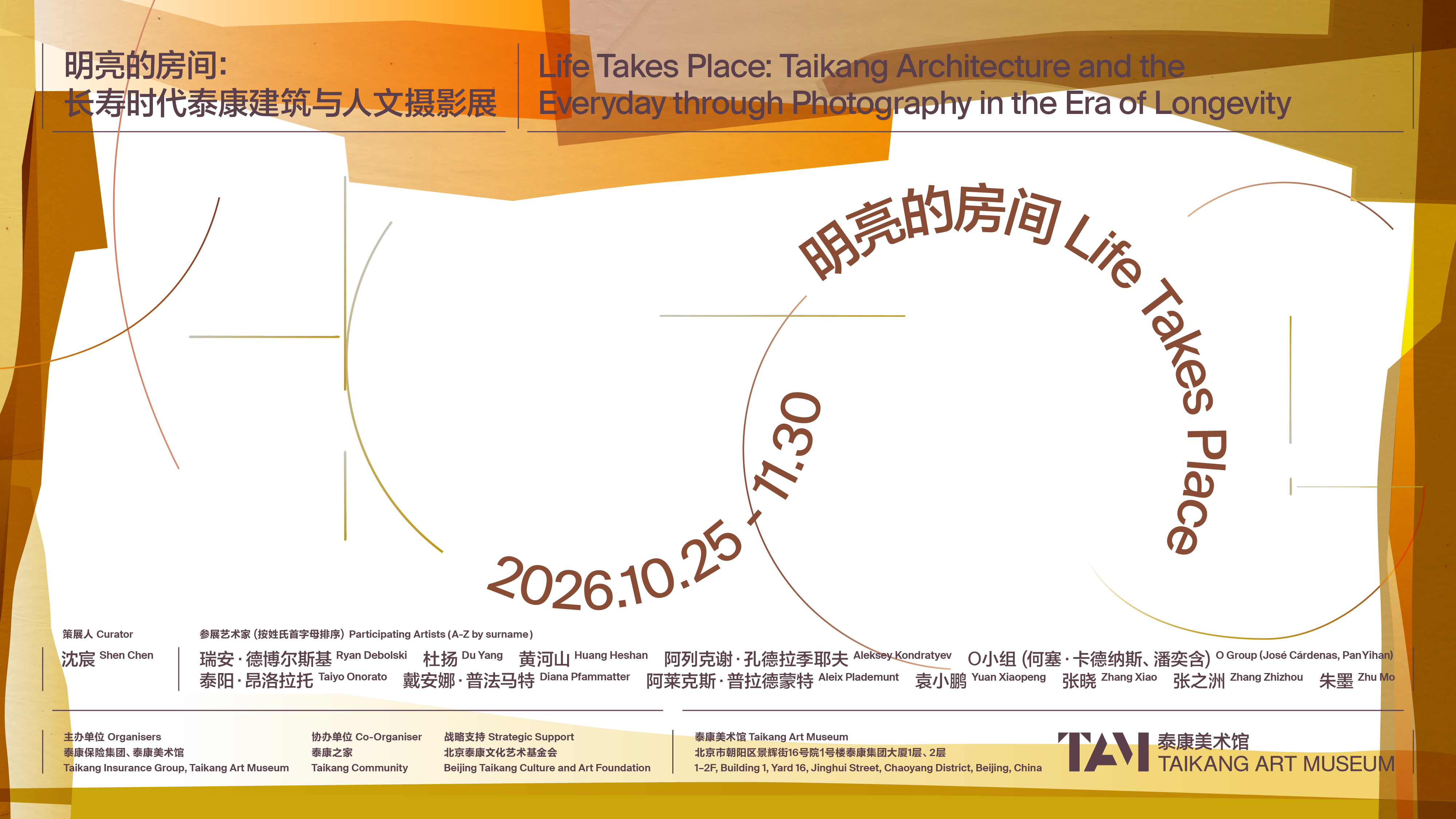
2026.10.25 - 2026.11.30
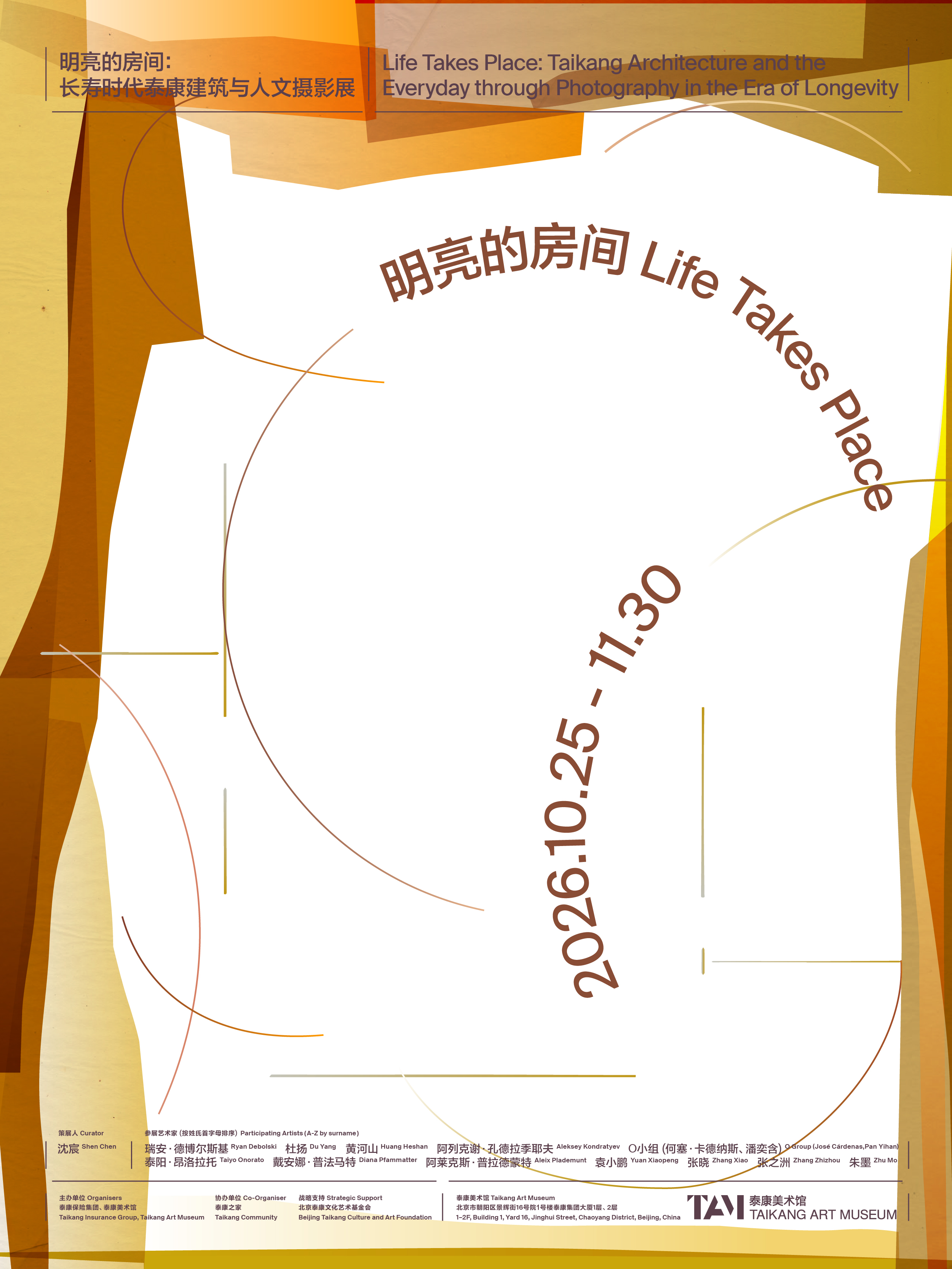
Life Takes Place: Taikang Architecture and the Everyday through Photography in the Era of Longevity
- Exhibition Dates2026.10.25—2026.11.30
- VenueTaikang Art Museum 1–2F, Building 1, Yard 16, Jinghui Street, Beijing Taikang Group Building
- OrganisersTaikang Insurance Group, Taikang Art Museum
- Co-organiserTaikang Community
- Strategic SupportBeijing Taikang Culture and Art Foundation
- Exhibition DesignYUARCHITECTS
- Participating Artists (in alphabetical order)Ryan Debolski, Du Yang, Huang Heshan, Aleksey Kondratyev, O Group (José Cárdenas, Pan Yihan), Taiyo Onorato, Diana Pfammatter, Aleix Plademunt, Yuan Xiaopeng, Zhang Xiao, Zhang Zhizhou, Zhu Mo
This exhibition grew out of a programme of photographic residencies and artistic commissions across several cities. Working at Taikang Tower and in Taikang Community senior living residences, twelve artists and artist collectives followed their own interests and ways of working. They spent time with residents and caregivers, developing their work in the particular settings of everyday life. No two communities are alike. Their locations, architecture, residents and daily routines offered different points of departure, and photography became a way of understanding everyday life.
The Chinese and English exhibition titles summarise the shared conditions the artists encountered from two perspectives: space and life. The Chinese title, The Bright Room, begins with space and visibility. A room is the most immediate of spaces in which life is lived. Its ‘brightness’ refers to light, but also to the possibility of being seen: of having one’s circumstances, wishes and experiences recognised and met with a response. Life Takes Place suggests that life is always happening in particular places. The spaces we inhabit shape how we live and are shaped by everyday life in return.
These communities bring together housing, medical services, caregiving, activities and social interaction in interconnected spaces. Architecture acquires meaning through use. The width of a doorway, the position of a handrail, the distance between pieces of furniture, the path from a room to a garden: each makes a difference to how a body moves. So do the timing of meals and activities, the routines of care and the ways objects are placed within reach. In such details, the rhythms of daily life take shape. Space accommodates the everyday and helps shape it. The exhibition considers how particular architectural spaces become part of life, and how they are continually redefined by bodies, labour and caregiving relationships.
Age can be counted, but later life cannot be reduced to a single experience. Autonomy and dependence often coexist: a person’s capacity to act may be sustained by another pair of hands, a tool, a pathway, or an arrangement of spaces and services. Care therefore involves collaboration among people, facilities and institutions. It responds to changes in physical ability and requires ongoing decisions about safety, efficiency, dignity, choice and autonomy. It happens between people, within environments and under the conditions that institutions create.
The artists arrived with their own ideas and expectations. Time spent observing, listening and being with others tested those ideas, sometimes changing their ways of working. Residents and caregivers contribute to the making of images through storytelling, action, consent, refusal and collaboration. Where a camera could be pointed, how close it might come, which images were selected and what happened after they were taken: these, too, became part of the work.
Photography enters the relationships it records. Who looks? Who is looked at? Who has a say in what the viewer eventually sees? Such questions remain open to negotiation throughout the process.
The exhibition’s six chapters—Perspective, Contact, Everyday Life, Narration, Interdependence and Coexistence—emerged from the residency sites. Perspective establishes a starting point for looking at community life through the relationship between a broader institutional view and individual experience. From there, five distinct yet overlapping ways of observing everyday life come into focus. Different as the artists’ methods are, their works show that the continuity of life depends on many small, sustained acts of coordination. ‘Brightness’, here, is something that must be made possible and maintained. It comes from light, but also from the support provided by space, labour, institutions and relationships. When people in different physical conditions can continue to make choices, maintain connections and participate in shared life, a room becomes the place where life happens. There is no single way to achieve this. It is worked out through daily adjustments, responses and negotiations. Life takes place through these small actions, and through them, life finds its place.
The exhibition thus raises a question for an era of longevity: as changes in the body, memory and ability become part of everyone’s life experience, how should we rethink autonomy, care and living together?