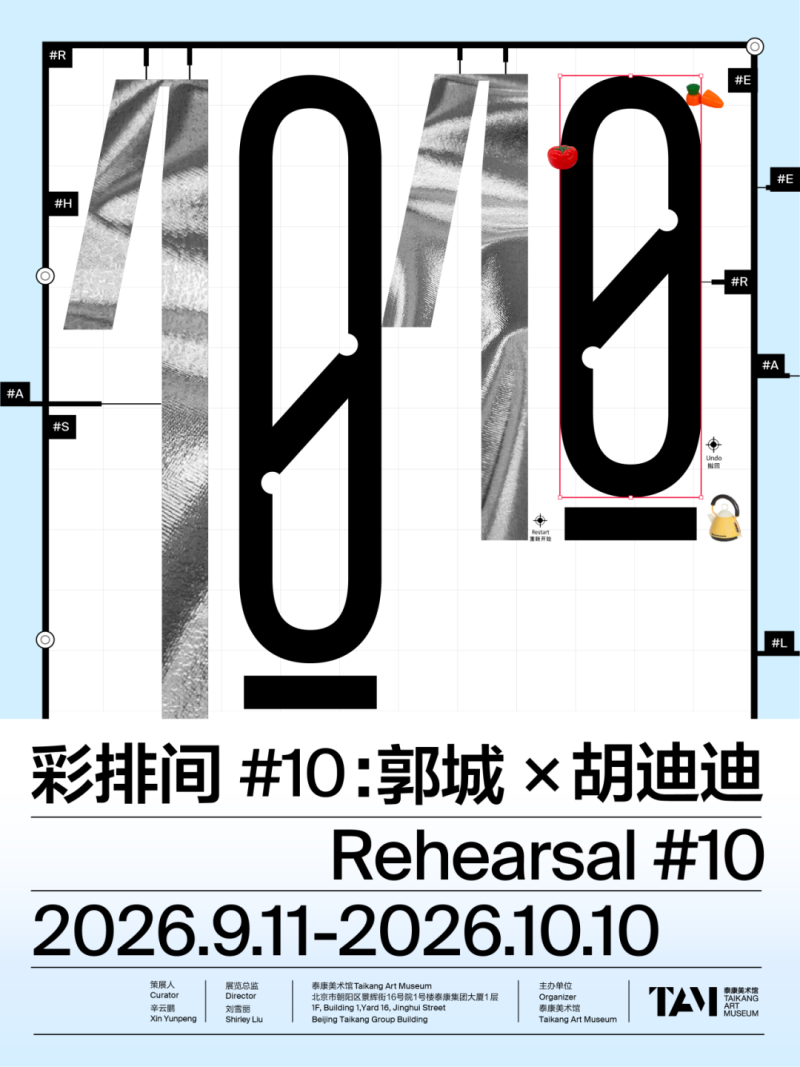
2026.09.11 - 2026.10.10
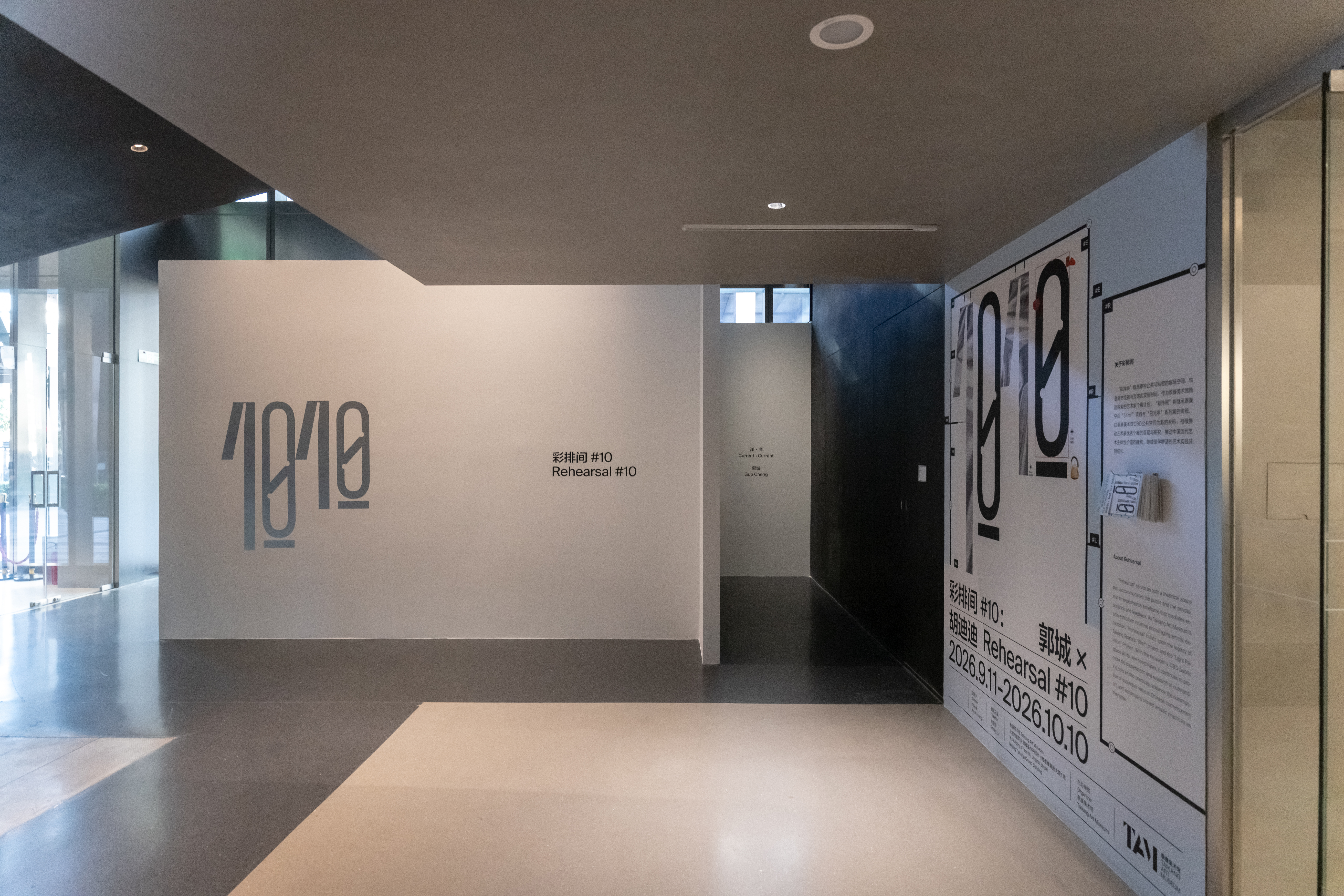
Rehearsal#10:Guo Cheng × Hu Didi
- OrganizerTaikang Art Museum
- Venue1F, Building 1, Yard 16, Jinghui StreetBeijing Taikang Group Building
- CuratorXin Yunpeng
- DirectorShirley Liu
- ArtistsGuo Cheng, Hu Didi
This edition of Rehearsal is presented as a dual solo exhibition, featuring Guo Cheng’s Yang·Yang / Current · Current and Hu Didi’s Labelling/Unlabelled. Though the two artists approach their work from distinct directions, they both engage with a shared core question: as technological development profoundly reshapes contemporary human existence, how is the relationship between humans and technology being redefined?
Guo Cheng’s Yang·Yang / Current · Current takes the Chongming folktale Shilang Suoli Mu as its narrative backdrop, reconfiguring the legendary water-parting pearl into a contemporary metaphor for the entanglement between human desire and technology. Hu Didi, translates her own experience as an AI annotator into a series of installations and video works, exposing the obscured repetitive labor and perceptual structures embedded in training data. Between myth and reality, data and labor, the two artists—working through their shared concerns—construct a field of multiple registers within Rehearsal.
Guo Cheng’s new work Yang·Yang / Current · Current
Shi Dalang, a young cowherd from Chongming, rescued a giant clam stranded on shore, which was in fact the transformed son of the Dragon King, and was gifted a water-parting pearl in return. With the pearl, he often entered the sea to retrieve treasures, yet he was never greedy. Later, to prevent others from taking it, he put it into his mouth and tragically choked to death. After his burial, his spirit manifested: his tomb repelled the ocean tides and protected the local villagers. The people built a temple to worship him, and the incense has never ceased since. This tale, recorded in Shilang Suoli Mu (石郎蓑笠墓) from Xuan Ding’s Qing-dynasty collection Yeyu Qiudeng Lu (夜雨秋灯录), serves as the inspiration for Guo Cheng’s new project. The story itself reveals the entangled relationship between humanity, nature, and desire, and forms the foundation of the spatial narrative in Guo Cheng’s work.
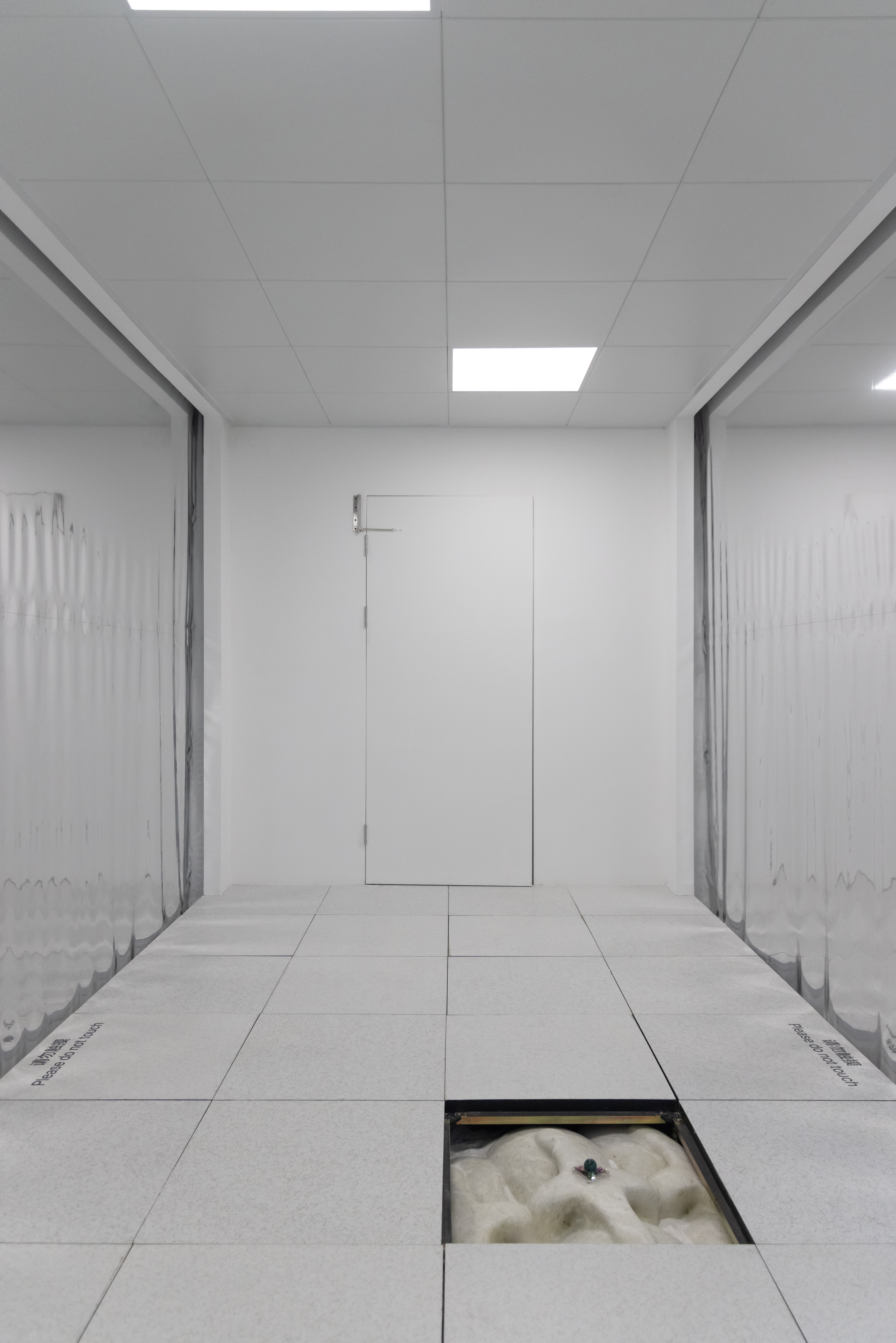
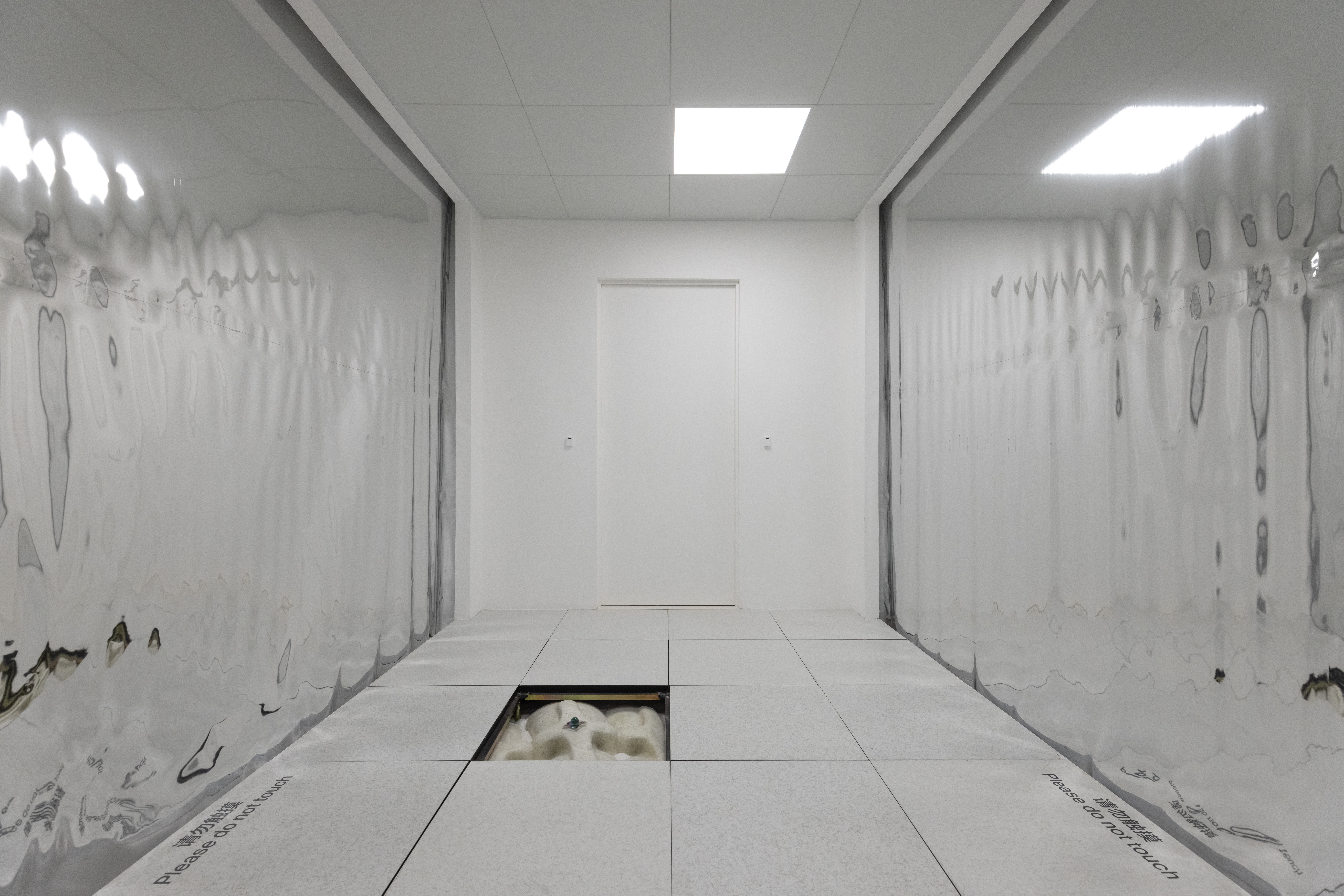
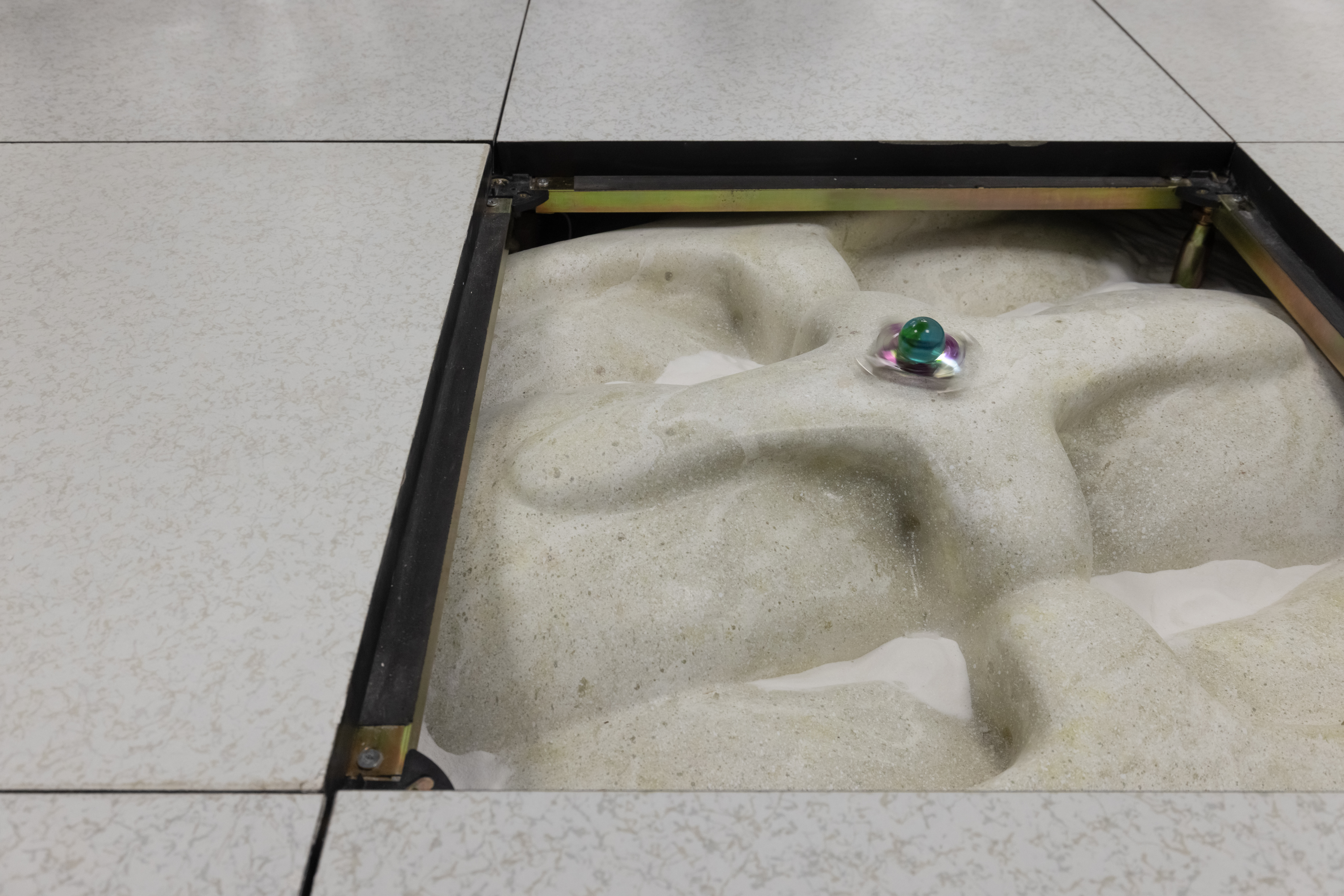
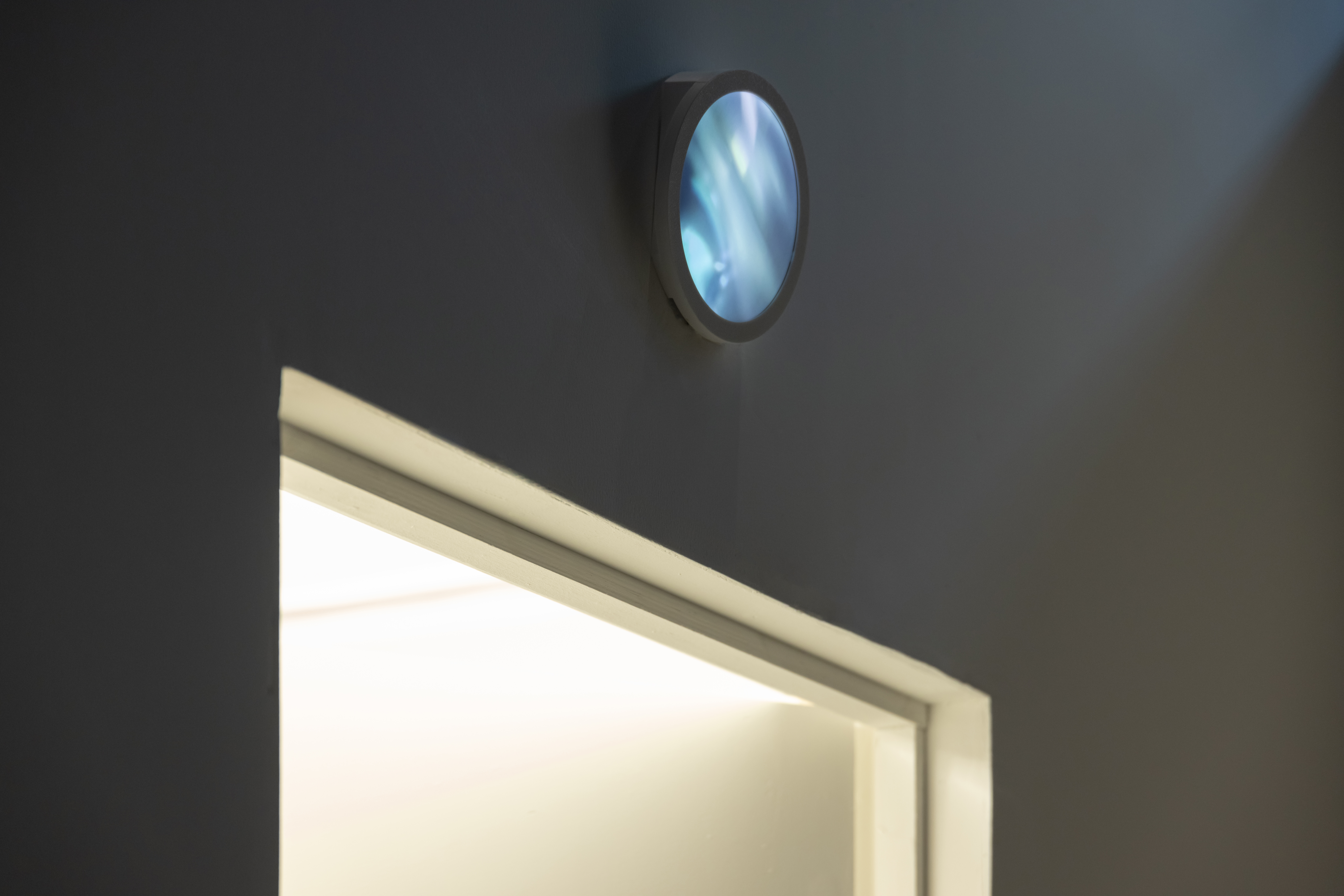
Guo Cheng’s new work Yang·Yang / Current · Current draws on the multiple meanings of the word current: water current, electric current, and the present moment. True to its title, the piece meticulously constructs a spatial structure: two “artificial ripples” use multiple mirrored reflections to “attack” the viewer’s spatial perception — mechanically triggering the shaking of the mirrors, splitting the image of a single subject, and dissolving the stable one-way gaze into disorder. The “technical object” at the center of the space reminds us: the power of technology is like a gleaming “water-parting pearl,” reflecting the desires deep within us.
Guo Cheng works with a more distilled formal language — one that is “both articulated and realized.” In his previous commissions, his works have always conveyed a sense of precision and aptness. Starting from a stable and sustained critical awareness, Guo Cheng is able to achieve a precise transition from concept to form, using artistic means to respond to the pressing issues collectively faced by humanity today. Unlike his earlier individual sculptures that unfold through biological and geological metaphors — rock cores, chrysalises, mist, amber — Current · Current tends toward spatial envelopment and a contemplative field. The former strips “the human” from sculpture, suspending artistic self-sufficiency while guiding us into discussions of complex issues; the latter seeks to construct a liminal space, drawing the viewer’s bodily perception into its fold and inviting us to re-examine our own desires.
Hu Didi’s Labelling/Unlabelled
Hu Didi is an emerging artist, during her student years, undertook a series of practices exploring the 16mm film medium. Through a self-built control system, she transforms the medium’s acts of capture and projection into a “dialogue machine.” By intervening in the operational logic of the vintage apparatus, she brings it into alignment with her own will, allowing it to serve as an expression of the subject behind the camera. In doing so, she offers a concrete, operational, and highly technical response to the enduring question of “authorship,” grafting the medium’s reflexivity onto a thoroughly contemporary discourse of infrastructure and data politics.
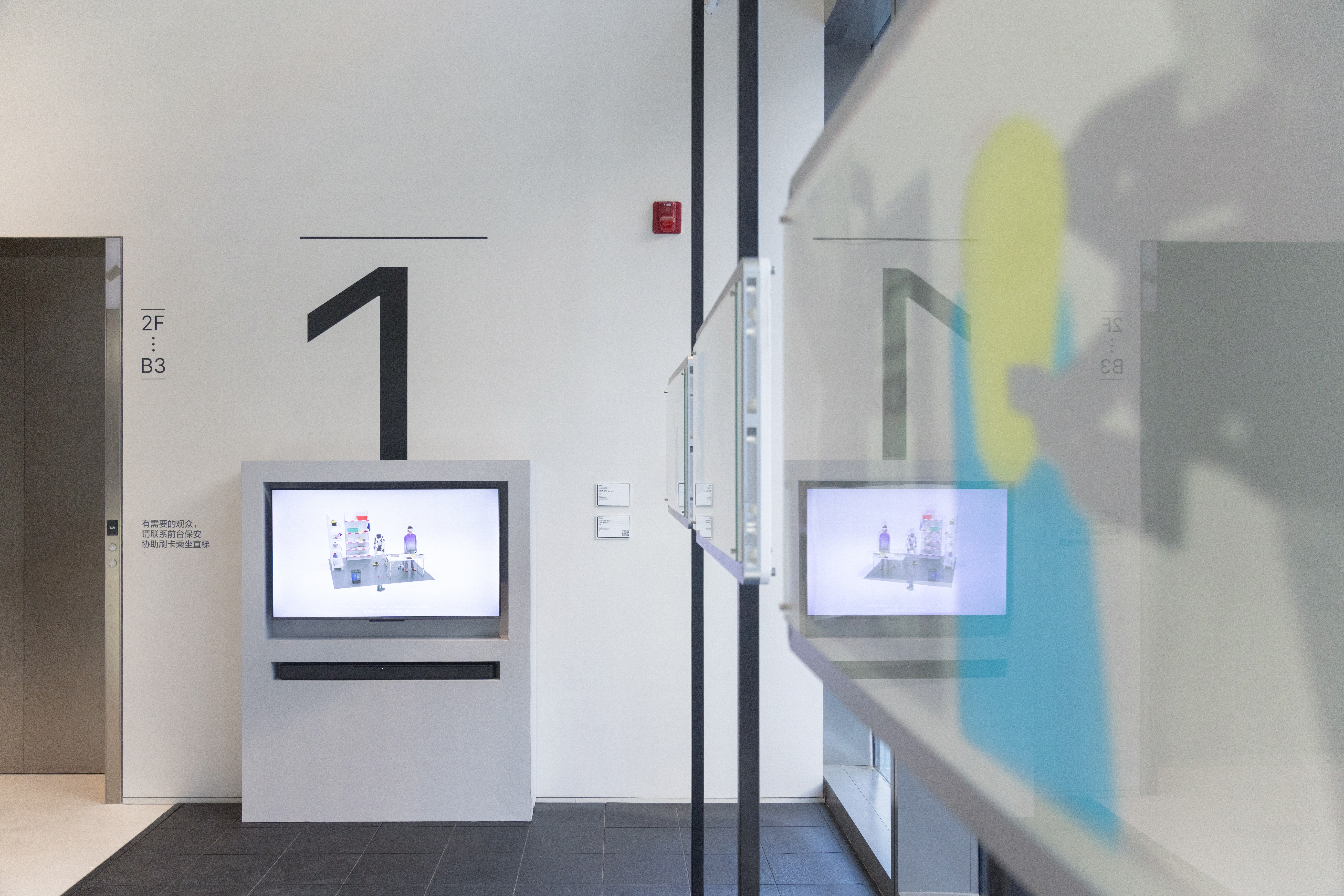
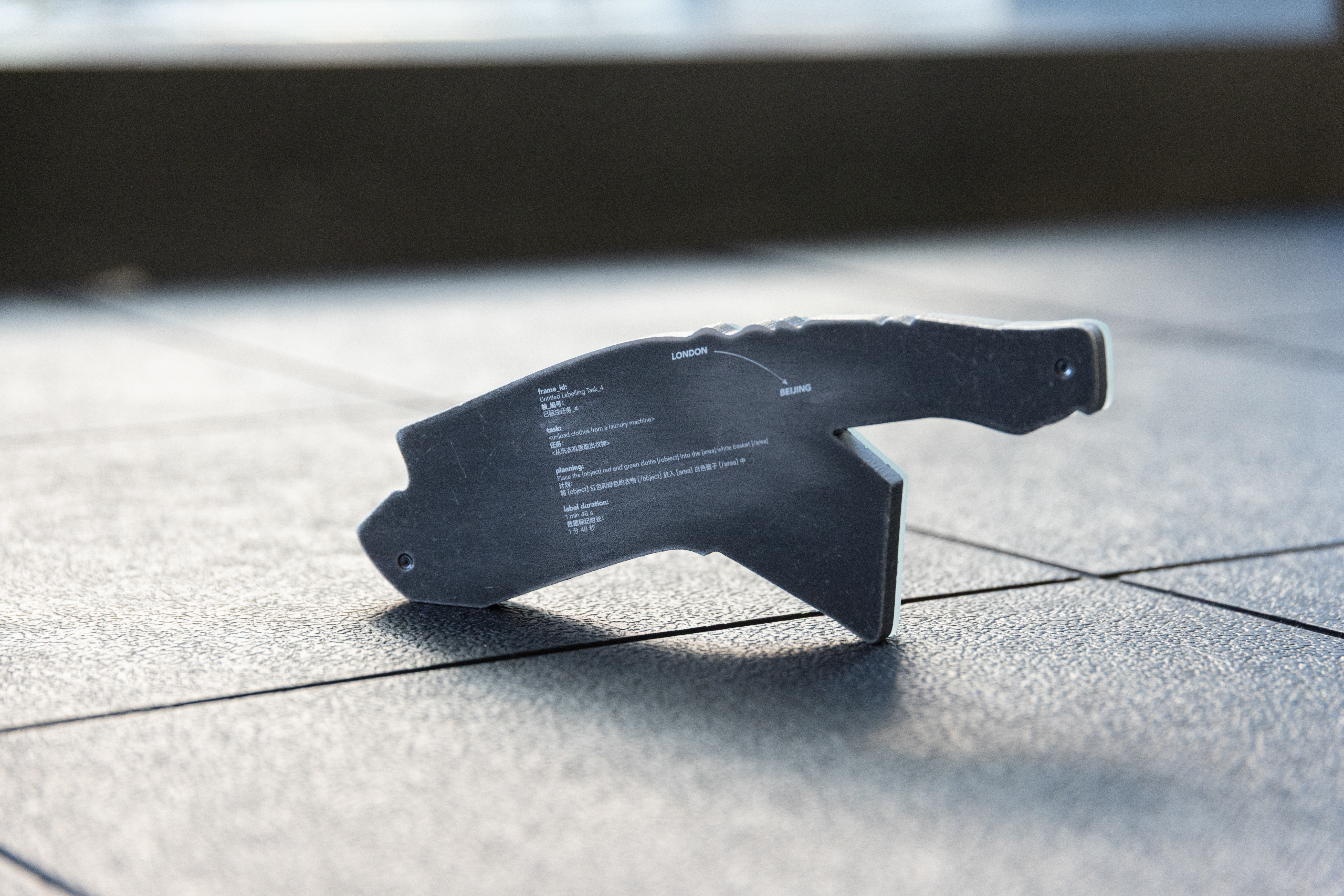
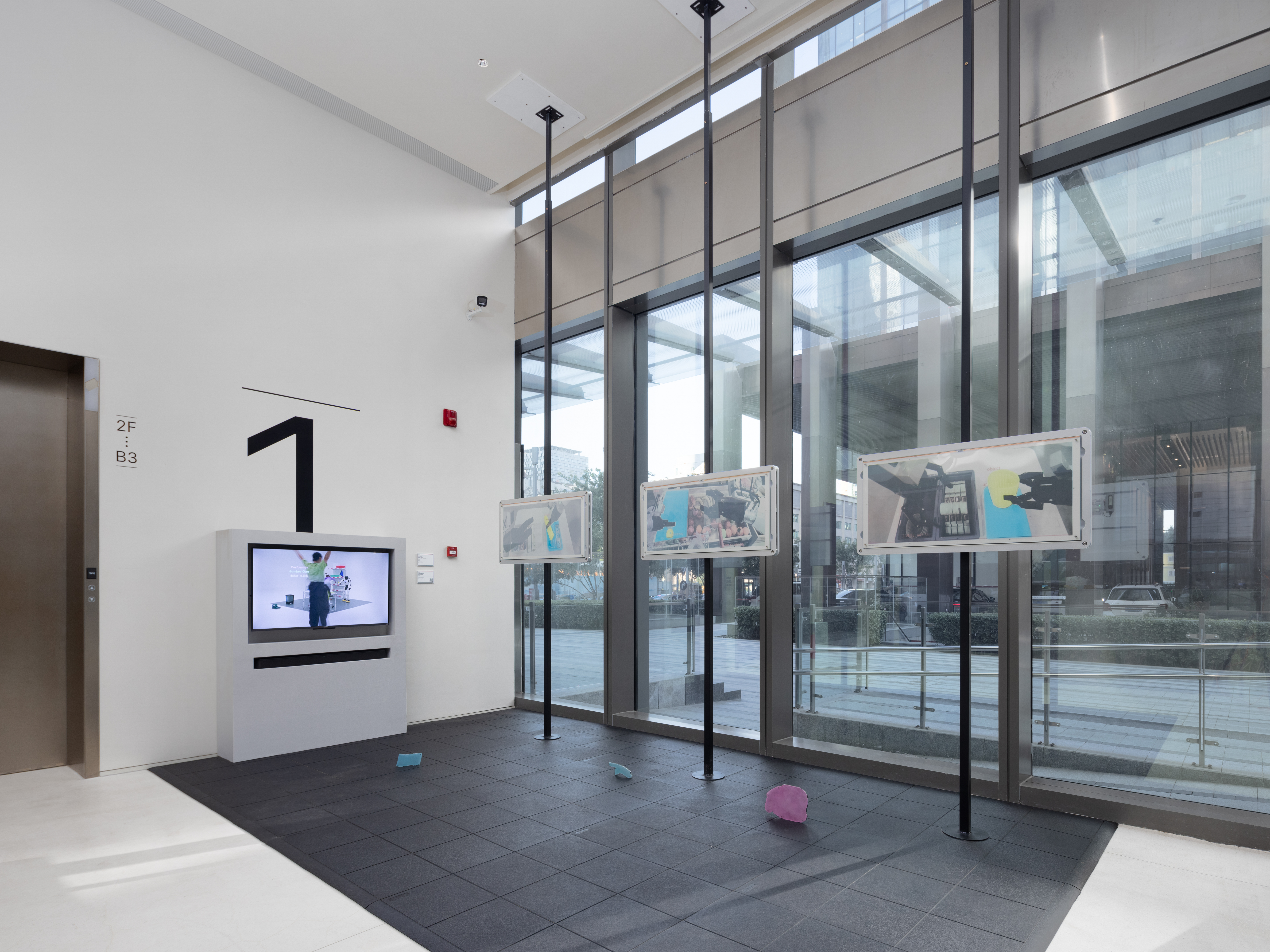
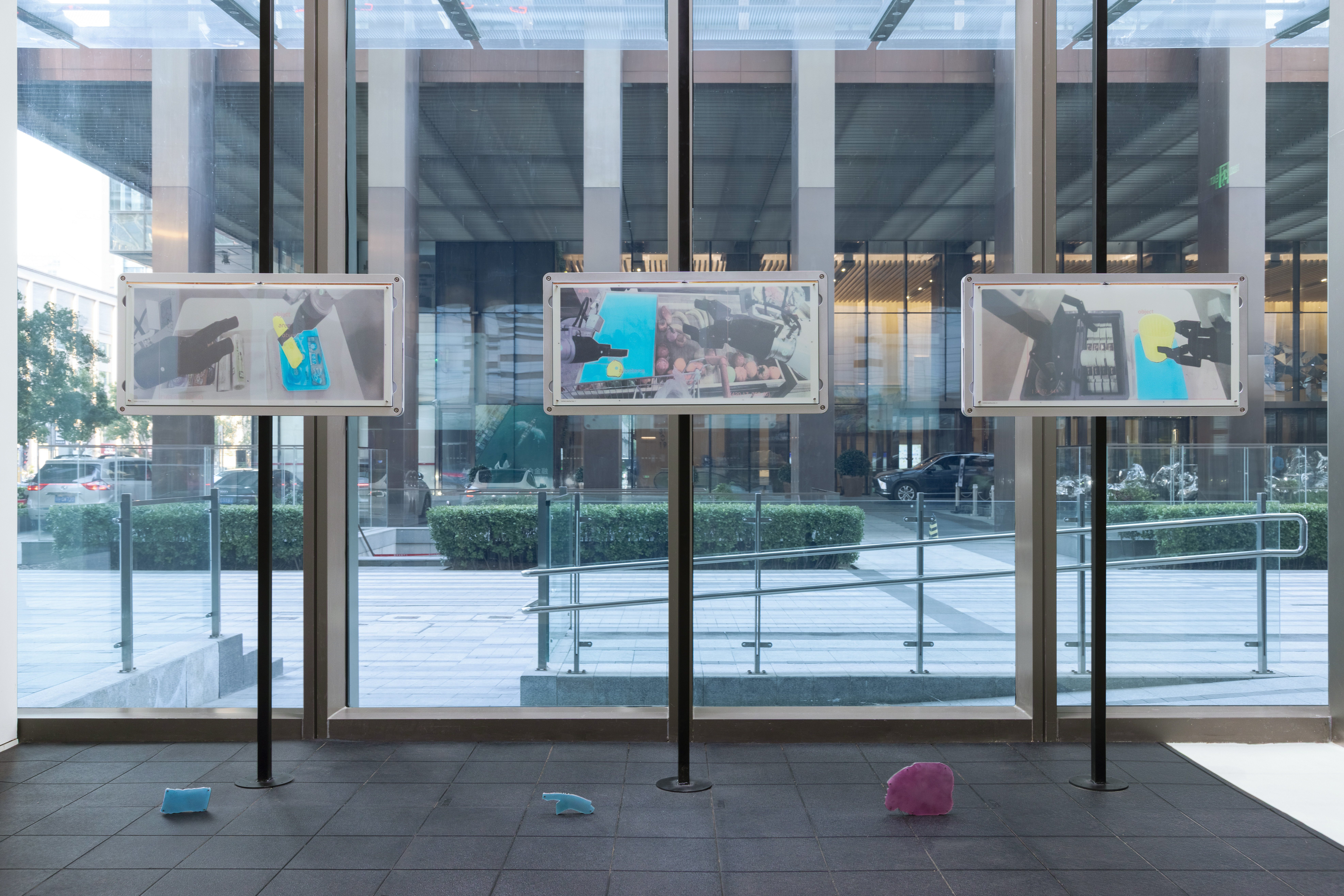
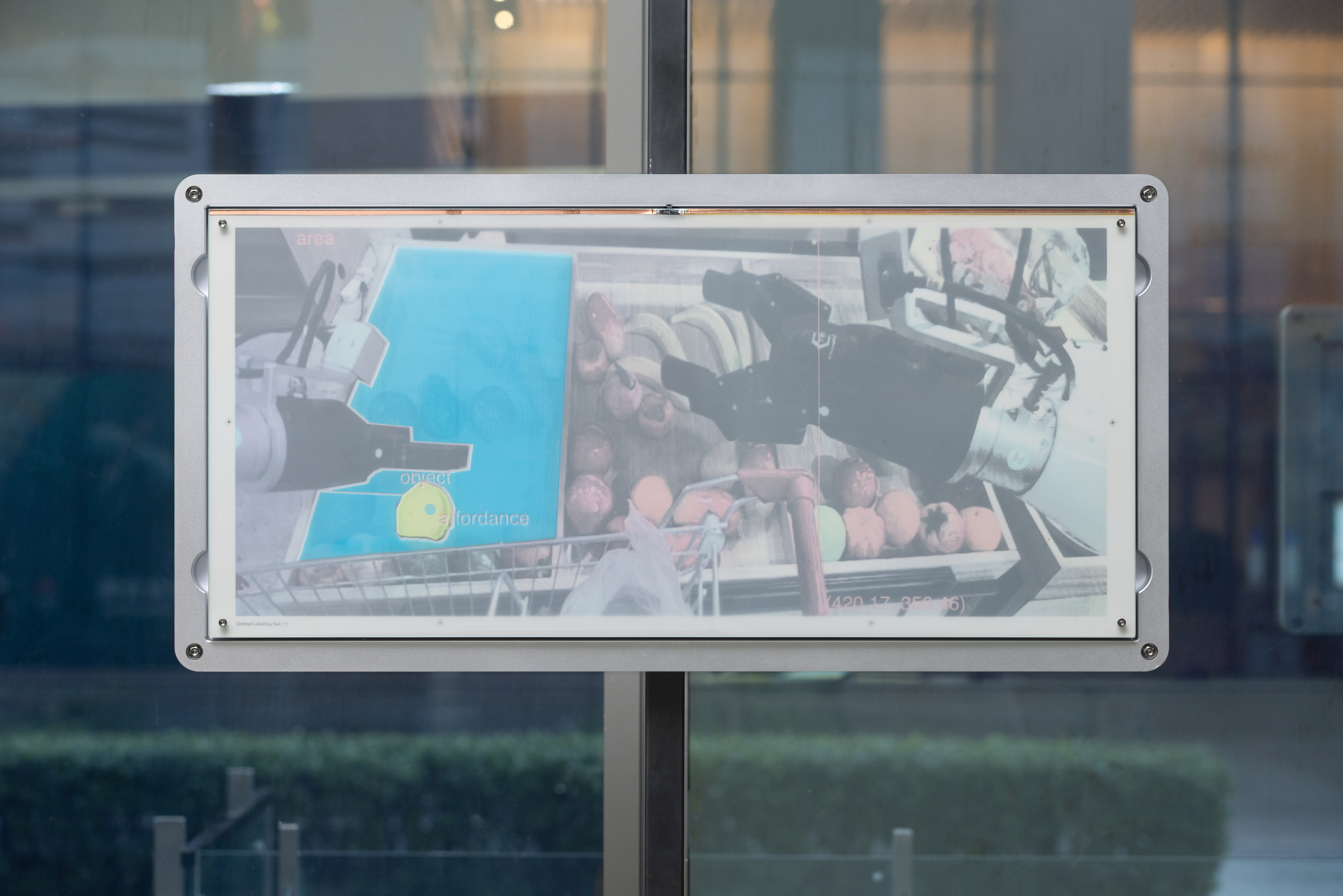
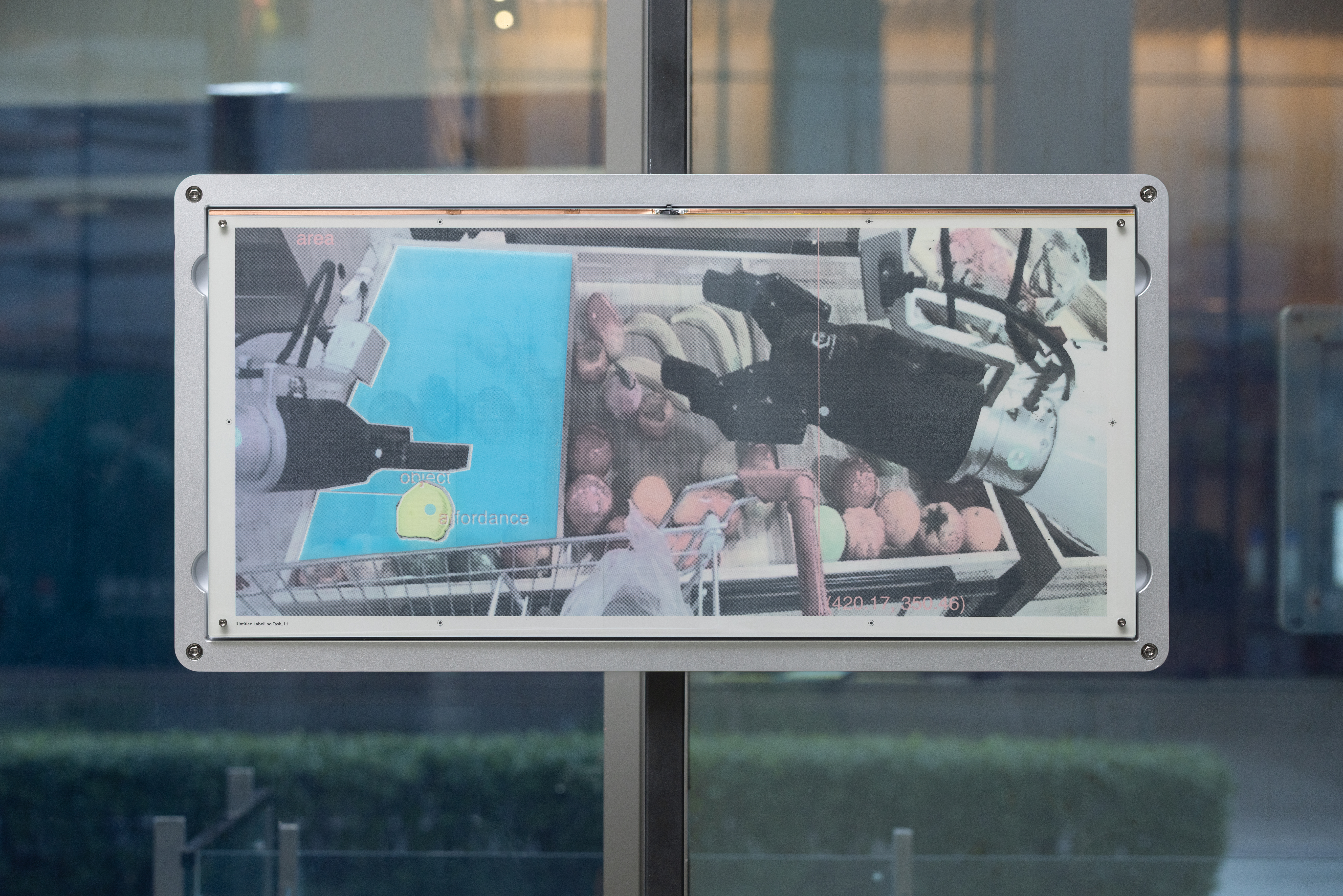
For this commissioned project in Rehearsal, Hu Didi translates her experience working part-time as an AI annotator during her student years into a series of installations and video works: she uses four-color screen-printing registration marks to annotate images and creates masks with switchable glass, repeatedly re-enacting the steps of this labor to foreground the repetitive and tedious work that underpins the embodied capture logic of AI training. Moreover, within these image annotations based on one-point perspective — where Hu Didi outlines fragments of matter in solid colors, which she also presents spatially in sculptural form — the resulting shapes resemble alienated fruits or tableware, or remnants “gnawed away” by non-human judgment.
She also takes the fragmentary scenes encountered in AI annotation work and, through imagination and rehearsal, documents them as panoramic performance on 16mm film. In an almost absurd manner, this allows us to see how remote labor is brought into an intimate proximity — a re-enactment of revelry and dance. Just how complex a machine is a human being, one that cannot be truly tamed by instructions.
It is difficult to pinpoint exactly when artists began to conceal the “I” more deeply within their practice, placing greater emphasis instead on the shared condition of “humankind” — climate, war, platform capitalism — issues more urgent than ever to be addressed.
The “localization or recontextualization” of certain prevailing topics is valuable and has become, in effect, the operative mode of nearly all contemporary artistic practice. Today, we see a growing number of young artists attempting, through their work, to delve beneath the surface of things and reveal complex structures — making visible a world that would otherwise remain unseen.
This iteration of Rehearsal brings together the latest commissioned works by two artists. While presenting vital, current artistic case studies, it also delves deep into different media technologies, probing the diverse possibilities of contemporary art.
INSTALLATION VIEWS